
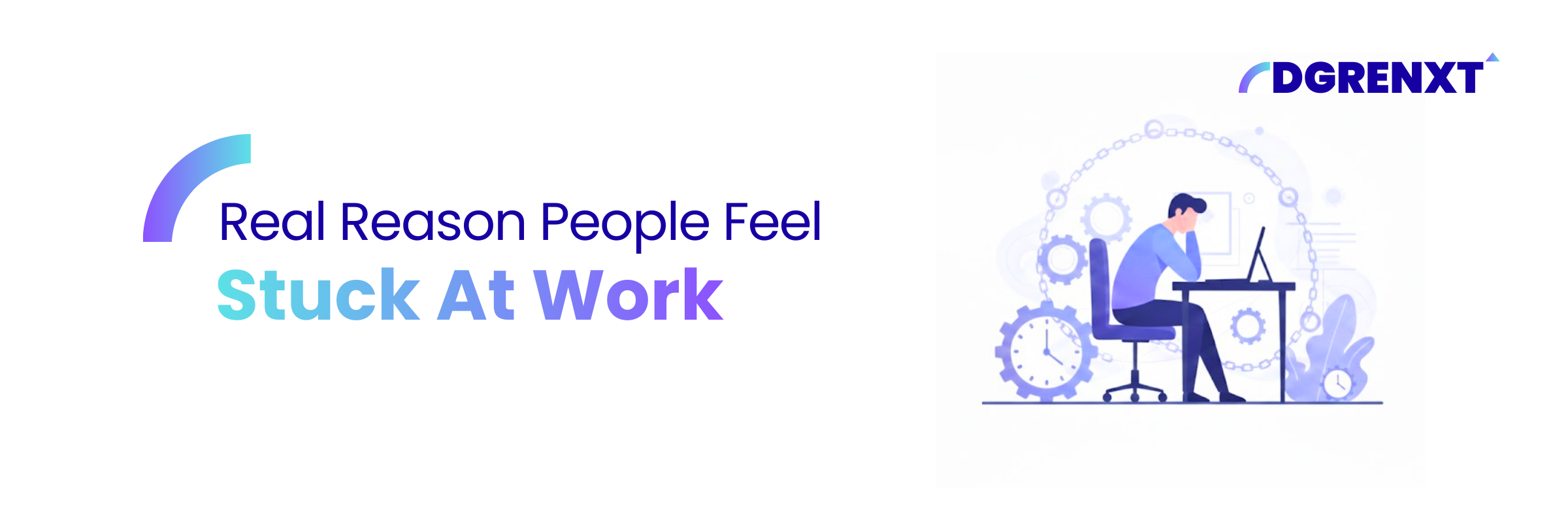
The Real Reason People Feel Stuck at Work
We have all been there. You wake up, go to work, and do what is expected. You are capable. You are delivering. But underneath the surface, there is a heaviness. A sense of friction. You are not moving forward, and you are not exactly falling behind. You are simply... stuck. Most advice tells you to "upskill," "network," or "find your passion." But what if the problem isn't what you are doing, but how you are forced to do it?
The "Stuck" Paradox
It is possible to be busy and stuck at the same time. In fact, high performers often feel the most stuck because they have more robust coping mechanisms. They can force themselves to function in misaligned roles for years. But eventually, the cost becomes visible:
- Energy leaks: Tasks that should take an hour take three, not because they are hard, but because they drain you.
- Decision paralysis: You hesitate on choices that used to be easy.
- Loss of agency: You feel like you are executing someone else's script.
It's Not Burnout (Yet)
Feeling stuck is often a precursor to burnout. Burnout is exhaustion. Being stuck is misalignment. When your core operating style—how you naturally think, decide, and execute—clashes with the demands of your environment, friction is inevitable. If you are a deep processor in a role that demands rapid-fire, shallow execution, you will feel stuck. If you are an autonomous executor in a role that requires constant consensus, you will feel stuck.
Operating Style vs. Job Description
Job descriptions list responsibilities. They rarely list the operating mode required to succeed. You might be hired for your "strategic thinking" (a skill), but the role actually requires "rapid tactical reaction" (an operating mode). Gap: You have the skill, but the mode creates friction. This invisible mismatch is the primary reason capable people stagnate.
Signs of Operating Misalignment
- You are competent but bored. You can do the work, but it requires no real cognitive load from your unique strengths.
- You are working hard but feel ineffective. improved output doesn't seem to move the needle.
- You envy others' clarity. It seems like everyone else knows the "rules of the game" except you.
Breaking the Stalemate
To get unstuck, you don't necessarily need a new job. You need a new lens. 1. Audit your energy, not just your time. Identify the specific tasks that leave you depleted versus those that energize you. 2. Name your operating style. Are you a Builder? A Fixer? An Optimizer? A Visionary? Knowing this helps you articulate why mismatch occurs. 3. Reframe or renegotiate. Can you adjust your current role to better fit your style? Or do you need to seek a role where your natural mode is the asset, not the liability?
Moving Forward
Feeling stuck is a signal. It is your professional operating system telling you that an update is required. Don't ignore it. Don't just "push through." Pause. Reflect. and Align. When you align your work with your core powers, "stuck" turns into "flow."
DgreNxt’s Core Power Evaluation helps you decode your operating style so you can stop forcing fit and start finding flow.