
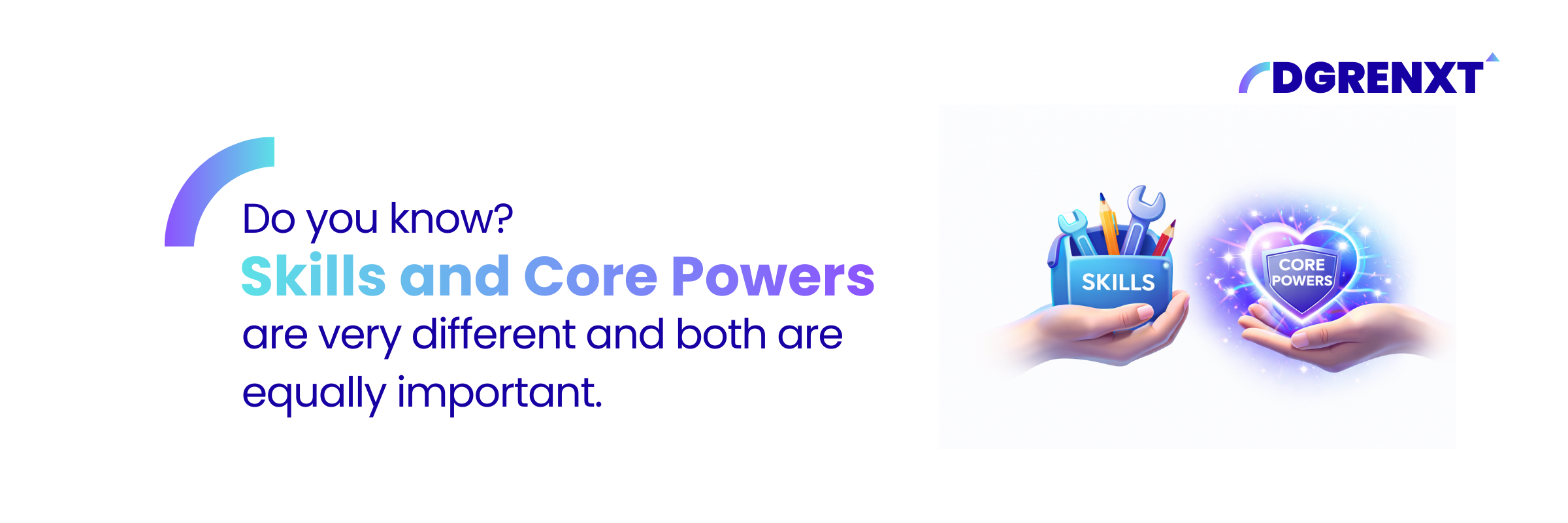
Do you know? Skills and Core Powers are very different and both are equally important.
Do you know? Skills and Core Powers are very different and both are equally important.
Skills are easy to spot. They appear on resumes, LinkedIn profiles, and job descriptions. They are discussed in interviews, validated through certifications, and often treated as the primary currency of career growth. Yet, many professionals with strong skills still feel inconsistent, stretched, or unsure about their direction. The reason is not a lack of capability. It is a misunderstanding of what actually drives performance and growth.
What skills really represent
Skills are learned abilities. They are developed through education, training, repetition, and experience. Over time, they allow a person to perform specific tasks effectively and meet role expectations. Skills matter. They are essential for entry, progression, and credibility. However, skills are also highly dependent on context. The same skill that feels effective and energizing in one role can feel heavy, draining, or limiting in another. When this happens, professionals often assume they need to upgrade their skills, when the real issue lies elsewhere.
Why skills alone do not explain performance
It is common to see two individuals with similar skill sets perform very differently in similar roles. One seems clear, confident, and steady in decision making. The other struggles with hesitation, overthinking, or fatigue. The difference is rarely intelligence or competence. It lies in how each person naturally processes information, handles pressure, and takes ownership. Skills describe what you can do. They do not explain how you operate while doing it.
What core powers actually are
Core powers are the natural operating strengths that shape how a person works. They influence how someone thinks through complexity, responds to uncertainty, makes decisions, and sustains effort over time. Unlike skills, core powers are not acquired through courses or certifications. They surface through repeated behavioral patterns across different situations. They remain relatively stable, even as roles and responsibilities change. Core powers determine how effectively skills are expressed in real work conditions.
Skills perform. Core powers sustain.
Skills enable execution. They help you complete tasks, solve problems, and meet expectations. Core powers determine whether that execution feels aligned or exhausting. They influence whether decisions feel clear or mentally draining, and whether growth feels intentional or accidental. This is why some professionals burn out despite being highly skilled, while others grow steadily with less visible strain.
Why high performers often misread the problem
High performers are rewarded for outcomes. Over time, they start associating success entirely with skills. When friction increases or clarity fades, their instinct is to add more skills, chase new roles, or seek faster growth. In many cases, the issue is not missing skills. It is a misalignment between existing skills and core powers. Without recognizing this distinction, even well-intended career moves can lead to repeated dissatisfaction.
How context changes everything
Consider a professional who is strong at analytical thinking. In the right environment, this strength supports clarity, confidence, and strategic contribution. In the wrong environment, the same ability can lead to overanalysis, delayed decisions, and mental fatigue. The skill remains unchanged. What changes is how well it aligns with the person’s operating strengths and expectations of the role.
Why this distinction matters for career clarity
Career clarity improves when professionals understand both their skills and their core powers, and how the two interact. Skills help you qualify for opportunities. Core powers determine whether those opportunities feel sustainable and aligned over time. Without this understanding, career decisions are often reactive rather than directional.
A question worth reflecting on
When work feels difficult, is it because you lack the skills required, or because your skills are being used in a way that conflicts with how you naturally operate? For many professionals, this single distinction changes how they view their careers entirely.
DgreNxt’s Core Power Evaluation is designed to bring visibility to these operating patterns, helping individuals understand how they think, decide, and grow at work beyond skills alone.