
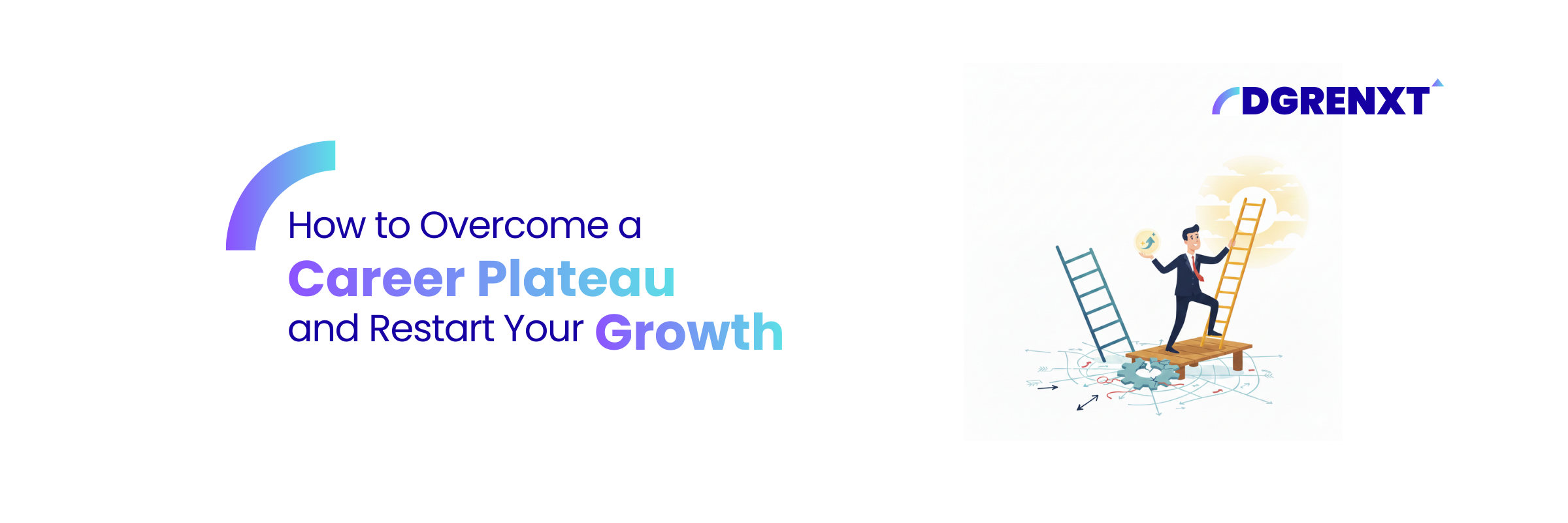
Career Decisions Fail More Due to Confusion Than Lack of Skill
You do not ruin your career because you lack skill; you ruin it because you lack clarity.
Most professionals assume that poor career decisions happen due to inadequate preparation or limited capability. When a move does not work out, they blame timing, experience, or technical depth. Yet when you examine career missteps closely, a different pattern emerges. Many wrong turns happen not because someone was unqualified, but because they were uncertain about themselves.
Confusion quietly drives more career mistakes than incompetence ever does.
The Assumption That Skill Automatically Improves Judgment
There is a widespread belief that as your skills increase, your decisions will naturally become sharper. This feels logical because technical competence improves performance, and improved performance often brings recognition and responsibility. However, decision quality is not the same as execution quality. A person can perform exceptionally well in a role and still struggle to determine whether that role is right for their long-term growth.
Skill expands what you can do, but clarity determines what you should choose.
Without clarity, options multiply while certainty shrinks. As careers progress, opportunities increase and choices become more complex. A capable professional may find themselves weighing multiple attractive paths without knowing which aligns with their deeper drivers. The absence of internal structure makes every option feel both promising and risky at the same time.
When Confusion Disguises Itself as Analysis
Confusion rarely looks like chaos. Instead, it often presents itself as careful thinking and responsible evaluation. You may build detailed comparison sheets, consult mentors, review compensation data, and analyze industry forecasts. All of this activity appears rational and strategic, yet beneath the analysis there can be a missing anchor.
Overthinking is often clarity trying to compensate for misalignment.
If you do not clearly understand how you operate under pressure, how you prefer to make decisions, and what environments energize you, then no amount of external data can resolve the internal uncertainty. The analysis becomes circular because the criteria themselves are unclear. You are comparing options without knowing what truly matters to you.
Why High Performers Experience More Decision Anxiety
It might seem that highly skilled individuals should find decision making easier. In practice, the opposite often occurs. When you are competent across multiple domains, you can realistically succeed in several directions. This flexibility creates a subtle burden because it removes obvious constraints. Instead of being forced into a narrow path, you must choose intentionally.
The more capable you are, the more intentional your clarity must become.
Without structural self-understanding, choices default to external markers such as title progression, salary growth, or peer comparison. These markers are visible and measurable, which makes them reassuring. However, they do not necessarily reflect alignment with your Core Powers or your long-term trajectory. Over time, decisions based purely on external validation create friction that feels like instability.
The Compounding Effect of Misaligned Decisions
Misaligned decisions rarely collapse immediately. Often, they function adequately for months or even years. You adapt, you perform, and you learn. Yet something feels slightly off, and that feeling gradually grows. Doubt creeps into future decisions, and confidence in your own judgment begins to weaken.
Repeated confusion compounds faster than repeated failure.
Failure at least provides feedback and clarity about what does not work. Confusion, on the other hand, leaves you uncertain about why something feels wrong. Over time, this erodes decisiveness and creates hesitation, which slows momentum more than lack of skill ever could.
Clarity as the Foundation of Better Decisions
Better career decision making begins internally. Before evaluating the role, the compensation, or the industry, it is essential to evaluate your operating structure. Consider whether you thrive in ambiguity or in predictable systems, whether you prefer deep specialization or broad ownership, and whether you gain energy from building processes or solving urgent problems. These questions reveal how your Core Powers shape your experience of work.
When you understand your structural strengths and gaps, trade-offs become clearer. Decisions shift from reactive responses to intentional moves. Instead of asking which option looks best externally, you begin asking which option aligns with your internal drivers and long-term direction.
Clarity does not eliminate complexity, but it reduces confusion.
That shift alone transforms career decisions from anxious gambles into deliberate steps.